



Watchmen on the Walls
A Call to Unyielding Vigilance


This is the day the Lord has made. Let us rejoice and be glad in it. Let us worship God.
Give attention to the inerrant and infallible Word of the living God.
“I have set watchmen on your walls, O Jerusalem; They shall never hold their peace day or night. You who make mention of the Lord, do not keep silent" (Isaiah 62:6 NKJV).
"Oh that you would rend the heavens and come down, that the mountains might quake at your presence—as when fire kindles brushwood and the fire causes water to boil—to make your name known to your adversaries, and that the nations might tremble at your presence" (Isaiah 64:1–2 ESV).
The grass withers and the flowers fade, but the word of the Lord will endure it forever. Let us pray.
Lord, may the words of my mouth and the meditations of our hearts be always acceptable to The, oh Lord, our Rock and our Redeemer. And let me preach as if never to preach again, as a dying man to dying men. Through Jesus Christ star Lord I pray. Amen.
The Role of Watchmen
"God has never left the Church without watchmen." —R.A. Bertram and Alfred Tucker, Isaiah 40–66.
Someone once advised me, "I have never gotten in trouble for what I did not say." It was, of course, an admonition to a pastor to be careful about what he says. That is good advice for anyone. There are times to be quiet. However, there are times when one must speak. We know the requirement to speak if a child is wandering into the street to play, or if a fellow worker needs a friendly, “I know you can do it,” or I need to say, “I love you,” to my wife. There are most certainly times to be quiet. But it is not virtuous to be silent when a fitting word could avoid catastrophe or provide needed encouragement.
In fact, in Isaiah 62, God commands watchmen—a metaphor for the prophets of Israel—to diligently watch over Jerusalem, the gathering of God's people, the capital of the kingdom, and the promised land. This has been the role throughout the history of God's assembly: those in the prophetic office are expected to know the times and to speak to the people.
The Course of Nations
I look around, and it does not take either genius or creativity to recognize that we have moved from gradually to suddenly, from "one day" to "now." There is impending trouble. This is not a word of prophecy but just a recognition of the obvious, much like the series of paintings, The Course of Empire, by Anglo-American artist Thomas Cole (1801-1848). Cole became a monumental figure in the Hudson River School of Art in upstate New York. While he painted biblical themes, he majored in the American landscape. English-born Cole was fascinated with the expansive features of the land and sky of his new home, the United States of America. Yet he wove together the themes of biblical theology with his massive landscape features to create a series of paintings from 1833 to 1836. It was a warning.


The five paintings in the series are The Savage State (1834), The Arcadian or Pastoral State (1836), The Consummation of Empire (1836), Destruction (1836), and Desolation (1836). The fact that Cole released such a prophetic warning in the midst of westward expansion created some controversy. Even a Supreme Court Justice weighed in, saying that the United States of America will never be desolate.1 Some believed the paintings were a political attack upon President Andrew Jackson’s allegedly ruthless Democratic party control and westward expansion policies. Regardless of the motivation and the controversy of its time, the paintings have remained a remarkable illustration of the rise and fall of nations described in the Bible and repeated throughout history.
Our Place in History
It is not my place to point to the exact spot where we find ourselves today on the schematic of the course of empires. If you subscribe to Cole’s theological reflection, you would have to admit that we have passed the Savage state and the Arcadian or Pastoral state. When America entered World War II, ours was still primarily an agrarian nation despite the industrial revolution and the advances of modernity. By the conclusion of that epic event in world history, America and the West, in general, began to enjoy the fruits of victory, suggesting a transition into the Conservation of gains. Modernity passed to postmodernity, and the world grew increasingly complex and hostile even as it grew interdependent. And the West, including the United States, Canada, Great Britain, Australia, and New Zealand—viz., the English-speaking peoples—began to experience internal conflict about the meaning of our history, our values, and our institutions.
The Judeo-Christian religion and the Christian worldview propagated by Saint Paul to the European peoples held the nation together with both an understanding of history and a vision for the future. Given the enormous changes that have happened in only the past few years in public life and in the private habits of the Western peoples, one must conclude that the period of Conservation of the Empire is at least under threat. Many of us would say more, but I am not interested in my personal opinion; my responsibility is interpreting and applying scripture.
The Call to Speak
So, I will leave it to say that a watchman, whether Old Testament prophet or New Testament disciple, and one who has been called to Christian shepherding must not remain silent. God calls his people—whether pastor of a flock or father of a household or each person in the vocation of self-care—to both watch and speak even as we await the coming of the Anointed One whose voice is in this passage from Isaiah 62.
Why the Church Must Not Remain Silent
I. Praising God Always (Isaiah 62:1-5)
"For Zion’s sake I will not keep silent, and for Jerusalem’s sake I will not be quiet, until her righteousness goes forth as brightness, and her salvation as a burning torch. The nations shall see your righteousness, and all the kings your glory, and you shall be called by a new name that the mouth of the Lord will give. You shall be a crown of beauty in the hand of the Lord, and a royal diadem in the hand of your God. You shall no more be termed Forsaken, and your land shall no more be termed Desolate, but you shall be called My Delight Is in Her, and your land Married; for the Lord delights in you, and your land shall be married. For as a young man marries a young woman, so shall your sons marry you, and as the bridegroom rejoices over the bride, so shall your God rejoice over you" (Isaiah 62:1-5 ESV).
We must first see that it is not just that watchmen are on the wall to warn. Watchmen are firstly on the wall to praise. They are leaders in the public worship of the living God. I have often told my past students that “you must never farm out the conducting services to another.” If God has called you to the task of Christian shepherding, then all means are at your disposal for that singular mission. You may have helpers who carry out the pastoral charge in both public worship and private ministrations, but in no way does a minister of the gospel appointed to shepherd a congregation outsource gospel ministry for the edification and the building up of the saints. That is his job, by ordained appointment of God through the approbation of the People through her officers.
As we move through the course of empires, as we follow Israel in her vicissitudes of self-governance, we must not be distracted by either the internal conflicts or the approaching threats. God is sovereign. God is in control. Our first role is to extol the Savior, the Lord Jesus Christ, and to offer Him to those who are without Christ. We are to teach whatsoever He commanded (Matthew 28:20) to those who would be baptized and follow Him. We are to establish congregations that will reach multiple generations of families and people groups so that there will be a multitude of souls safe in the arms of Jesus (1 Thessalonians 2:19-20): “For what is our hope, or joy, or crown of rejoicing? Is it not even you in the presence of our Lord Jesus Christ at His coming? 20 For you are our glory and joy” (NKJV). This is our first and great task as watchmen on the wall. "For Zion’s sake, I will not keep silent" (Is. 62:1) is the necessary affirmation of pastoral ministry. It must also be the creed of a father over his household or a single mother as she must teach her brood both the ways to water and food and cover from would-be predators in the shadows.
Moreover, let every believer conduct a regular inventory of his soul and speak the truth of the gospel in the humble soliloquy, "I will not keep silent, but I will speak and sing and pray the gospel of God which is causing the kingdoms of this world to become the kingdoms of our Lord Jesus Christ" (Revelation 11:15).
II. Alert to Constant Threats (Isaiah 62:6-7)
The role of the watchmen was not only to praise God without ceasing and to be prayer warriors on watch throughout the hours of the night but also to be alert for any sign of threat to the citadel of true faith in Christ. Most of the New Testament is written with a concern for threats to the growth and sustainable strength of communities of Christ and individuals within those communities. Threats existed from both without and within. The devil, the flesh, and the world conspired to upset the advancing kingdom of God. It is both a call to the church and the individual to keep watch over their own souls (1 Peter 5:8).
It is very apparent to this Christian shepherd that the flock of Christ is facing difficult days that require special attention. The possible trials and tribulations that we may see are not novel but have been chronicled throughout the history of the church. The defeated serpent's strategy is to draw the people into a desert-like condition and tempt them to stray, deny God, and give in to the desires of the flesh.
This was the case in the Book of Revelation. Written after the great persecutions of Nero and the martyrdom of Peter and Paul, John was exiled to the Isle of Patmos by Emperor Domitian. Persecution would ramp up, but at the time, there was a lull that created complacency within the church. It is written about that time:
"Revelation was written during a time when some Christians saw it advantageous to assimilate with the culture. There was likely some local persecution but not widespread state persecution. Consequently, there was a tendency for complacency and a lack of desire and motivation to remain faithful." —David Seal, "Revelation" in The Lexham Bible Dictionary.
I believe that the greatest charge before us today is to continue in God's praise and worship and cultivate a private devotional life so that we may be strengthened before entering the next possible phase in the course of empires or, if we were to be more biblical, the inevitable entropy that follows blessing. This means that we should be careful about our churches, our associations, and our very lives.
I believe the third practical necessary step that must be taken in order to secure ourselves before entering any storm has come upon the church in days past. These steps include:
Heads of Households: Guard Against Assimilation
Fathers and heads of households must be careful about assimilation into the system of unbelief in the world. You may be faithful in every way in leading your home to say, "As for me and my house, we will serve the Lord" (Joshua 24:15). Yet, the media of a godless and corrupt generation pumps moral raw sewage into the sanctified and hallowed halls of our homes. It is no easy task, given the pervasiveness of the sensuality of this culture. There are no new or novel instructions here. The faithfulness demanded in Isaiah’s day and John’s day is the same in ours. Cultivate a spirit of wholesomeness of speech and habits shaped by the Word of God (Ephesians 4:29). Put on the full armor of God that you may be protected against the evil one (Ephesians 6:11).
History shows that there are not only those who are complacent and who fall into the trap of unbelief during days of difficulty; there are also those who go through these times with remarkable spiritual resiliency. I want that to be the legacy of those who read these words. Turn to the Lord Jesus Christ, stay broken and supple at the foot of the cross, and gather those appointed to your charge—whether a flock of Christ, a family, employees, neighbors, friends, or any other association. Encourage each other so that the fruit of encouragement will be boldness. There is no doubt that the Lord Jesus Christ will build His church in spite of the worst opposition. The question is always, will I be a part of that amazing victory? I know that it will not be in your strength or mine, but God promises that He comes to those who call to Him. Strengthened Himself in the Lord, so too we must seek God in word, sacrament, and prayer to be strengthened (1 Samuel 30:6).
Pastors and Church Leaders: Fill Your Services with Scripture
As a seminary professor, I would have a word for pastors and church leaders. Fill your services with scriptures. A blight on the evangelical churches of the late 20th century and early 21st century developed because of a preoccupation with an entertainment motif rather than the Acts 2:42 or even Synagogue motifs of the early church. As the pastor became a celebrity emcee for a veritable concert of solo-driven performances, the people were left in a preformation state of looking up to a screen with mouths open and voices stilled.
There is excitement and sensuality plenty in the world. Let our worship services return to reverence and awe and be a sanctuary for something that is altogether different from the world, that the world may know that we worship the invisible God, the three-in-one, who came to us through His Son, our Savior, the Lord Jesus Christ. He rose again from the dead (1 Corinthians 15:4), and He ascended into heaven, where He is seated at the right hand of the Almighty (Mark 16:19). He prays for us. He intercedes for us now (Hebrews 7:25).
Gather the people in sacred assembly for the teaching of the apostles, the fellowship that brings encouragement and edification, the regular use of that mystical means of grace—the Lord's Supper—and "the prayers" (Acts 2:42). You will notice in Acts 2:42 that there is an article before prayers — “the” prayers. This speaks to an ordered and set form of intercessions—a common prayer—that may be used by a congregation so that (often a section of scriptures or a Psalm) their voices are one and that the scriptures become embedded in their very souls. This, of course, follows the rabbinical synagogue tradition in which Jesus participated in His time on earth (Luke 4:14-30).
I shall never forget the testimony of one of America's great war heroes, a dear friend and parishioner, Colonel Roger Ingvalson (USAF-Ret) (1928-2011). Roger, awarded the Silver Star and Legion of Merit, among other decorations, was shot down by the North Vietnamese (5/28/1968), and he was placed in what became known as the Hanoi Hilton. There, he was beaten severely and tortured physically and mentally: “He endured 20 months in solitary, and torture that included ropes and leg irons.”2 During that time, Roger says that he began to think about the scriptures, the creeds, and the other words of biblical encouragement that he heard every week in the Lutheran Church of his boyhood in the Norwegian communities of Minnesota. Roger says that he came to Christ in that cell on his knees reciting the Apostles' Creed, the 23rd Psalm (Psalm 23), the Lord's Prayer (Matthew 6:9-13), and other parts of "the prayers" that were offered during the sacred assemblies of his youth.
The illustration powerfully reminds pastors and church leaders to incorporate "the prayers" into the life of our services. Our people will need to be strengthened for the days ahead. Do not be silent. Keep watch. Pray, but also warn and help prepare soldiers for the trial.
III. Proclaim the Coming New Heaven and New Earth
The Church must not keep silent because there is a new heaven and a new earth on its way. Isaiah makes a critical turn. The course of nations does not end in desolation but in the flowering of the desert and in the exaltation of the humble and lowly (Isaiah 35:1-2). Thus, we must never believe that the cycle of history concludes with utter and final and irreparable desolation. There should be one more painting in the gathering of five paintings, and that should be the new heaven and the new earth (Revelation 21:1).
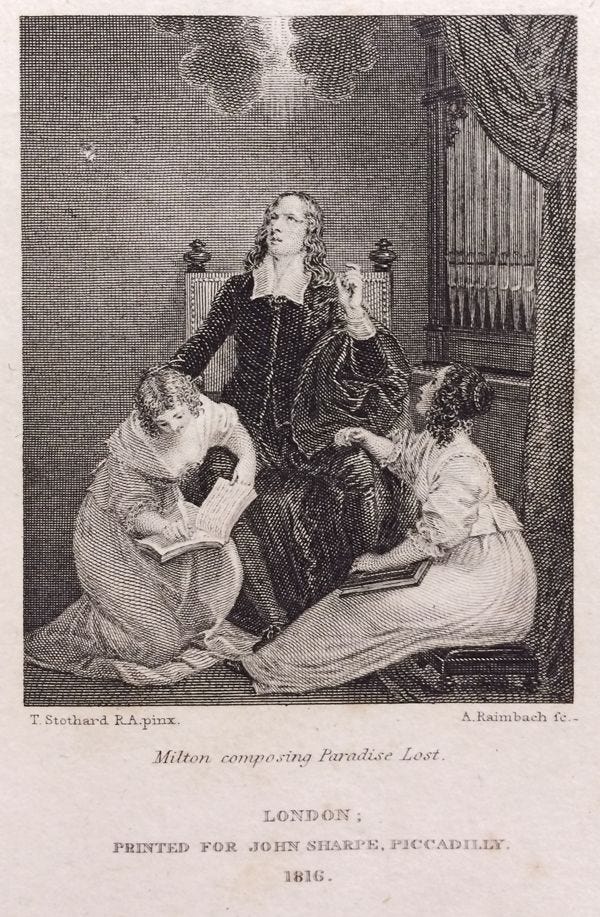
The watchmen on the wall are not only to pray and to warn but also to announce the coming of another kingdom. As surely as he sees the signs of destruction and desolation, he recognizes that where sin abounds, grace abounds even more (Romans 5:20). Your apostle Paul said that we are to encourage one another in the second coming of our Lord Jesus Christ (1 Thessalonians 4:18). As he spoke these words, he was already on a pathway to martyrdom under the evil Nero of Rome. Even tribulation unto death cannot stop the wider and larger movement of history towards a consummation: Paradise lost is already becoming paradise regained. As it has happened in your own soul, so it is happening in the world. The kingdom is growing from the inside out. The workers of wickedness seem to gain ascendancy, but any capture of tactical hills or breach of walls is temporary. The larger strategy is not theirs but belongs to Almighty God. He sees. He ordains. And the will of man will not hinder his providence in the least. Even our sins and the works of the devil will be transformed to advance His plan. And His plan is good. The conflicting powers at the site of the Cross being sovereignly melded into the eternal will of God for salvation is the single greatest demonstration of the providence of God.
God has a teleological (τέλειος, [téleios]: “Having reached its end; perfect, complete”—Strong’s Greek, word no. 5046) vision—an unwavering plan established in His secret counsels before the foundation of the earth (Ephesians 1:4)—to bring all nations and all peoples to the point of confessing the Lord Jesus Christ and the knowledge of God moving across the earth as the waters cover the seas (Habakkuk 2:14).
So, then:
Watch. Pray. Warn. Prepare. Look forward with absolute confidence and unshakable optimism. Jesus Christ has risen from the dead, and all lost causes are now banished (1 Corinthians 15:20). There may be difficult days ahead, but there will also be days of refreshment even in the midst of the wilderness. There can be no other end to this message than to let this poor, unprofitable watchman nevertheless adjure you with love in the name of God to watch and be silent no more. Pray without ceasing. Warn without caveat. Wait without despair.
In the name of the Father, and the Son, and the Holy Spirit. Amen.
Alfred L. Brophy (2009). "Property and Progress: Antebellum Landscape Art and Property Law" McGeorge Law Review (40): 601.
See his entry at https://pownetwork.org/bios/i/i004.htm. For a recorded history, see the Library of Congress papers on Colonel Roger Dean Ingvalson: https://www.loc.gov/collections/veterans-history-project-collection/serving-our-voices/diverse-experiences-in-service/prisoners-of-war/pows-in-in-korea-or-vietnam/item/afc2001001.09773/. I wrote a Christmas story based on his life. It is published at Vietnam POWs: https://vietnamwarpows.com/publications/a-heros-story-at-christmastime-colonel-roger-ingvalson/.