

PRAYING HOLY WEEK
The Paschal Mystery as the Christian’s School of Prayer

My beloved in the Lord, and all who read these words:
Over the past two weeks, I have labored to complete what, in former seasons, I might have written in the span of a day. As a result, I was unable to release the devotional readings sequentially from Palm Sunday through Easter Sunday as originally intended. Yet we trust the Lord, who both rules and overrules all things for our good and for His glory (Rom. 8:28).
Indeed, this slower pace has borne an unexpected grace. Lingering longer in the Word of God has yielded deeper joy, greater awe, renewed wonder, and a steadier hope. Often it is so: the one who most needed the truths of Holy Week was the one who was given the privilege of writing them.
I commend these reflections to you, and to readers yet to come, trusting that the Lord will use His Word to strengthen faith, deepen prayer, and fix our eyes upon Jesus Christ. May you grow in the grace and knowledge of our Lord and Savior Jesus Christ, to the glory of God and for the good of your soul (2 Pet. 3:18).
We plan to compile these into a series of devotional books for the Church Year in the coming days. We will make it available to all of our subscribers.
Introduction
Praying Holy Week
Holy Week—the paschal (“paschal,” referring to Passover) mystery of God Himself becoming the perfect sacrifice for the sins of the world (1 Cor. 5:7; Heb. 9:26).1 It is a mystery not because it is concealed, but because it is revealed: “Great indeed… is the mystery of godliness: He was manifested in the flesh” (1 Tim. 3:16). The events of Holy Week, from Palm Sunday to Resurrection Sunday, present what might appear, to the modern mind, an absurdity—a strange reversal in which weakness becomes strength, death becomes life, and the defeat of God becomes the victory of grace (1 Cor. 1:18–25). Yet this is not irrationality; it is the deeper logic of heaven entering the broken grammar of earth. Here, the Word becomes flesh (John 1:14). Here, eternity moves within time. Here, the unrepeatable act of redemption becomes the eternally sufficient ground of life everlasting (Heb. 10:10–14).
Of course, all days—all weeks of days—are holy. “The earth is the LORD’s and the fullness thereof” (Ps. 24:1). John Donne famously preached, “All occasions invite His mercies, and all times are His seasons.”2 Yet the Lord who sanctifies all time has also appointed certain days as luminous markers in the history of redemption—days not merely symbolic, but historical; not merely remembered, but inhabited through faith (Luke 1:1–4). The Gospel writers present the Passion not as myth, but as testimony: “that which we have heard, which we have seen with our eyes… and touched with our hands” (1 John 1:1). No sequence of days is more fertile for new life—filled as they are with both cosmic and personal drama—than those we call Holy Week: the days from Sunday to Sunday, from the Triumphal Entry into Jerusalem (Matt. 21:1–11) to the Resurrection of our God and Savior, the Lord Jesus Christ (Matt. 28:6).
Walker Percy once observed that modern Man often finds himself dislocated, sensing that something has gone wrong without knowing how to name the loss. Holy Week speaks directly into that quiet dislocation. The Gospel announces that what has been lost is not merely moral clarity, but communion with God—and that what is restored is not merely information, but life. John Calvin described prayer as “the chief exercise of faith.”3 Thus, to consider Holy Week devotionally is not merely to observe sacred history, but to enter a school in which the heart learns again how to speak with God.
I want to consider each day of Holy Week to draw forth our Lord’s lessons in this school of prayer. Prayer, as Ole Hallesby wrote, is simply to let Jesus into our needs.4 My pastoral aim is to help the reader begin to frame all of life through the spiritual lens of prayer: What is really happening here? “We look not to the things that are seen but to the things that are unseen” (2 Cor. 4:18). What are the motivating realities that remain hidden, yet profoundly active? “For we do not wrestle against flesh and blood” (Eph. 6:12). How do we discern the grace that lies beneath the presenting circumstances? “Your life is hidden with Christ in God” (Col. 3:3). How are the ordinary events of life becoming, in the hands of Providence, the means by which Christ is formed in us? (Gal. 4:19; Rom. 8:28–29).
Thomas Merton wrote that prayer is not so much a matter of speaking as of awakening.5 Learning to live by pausing long enough to attend to life’s events awakens—and thus strengthens—the inward life of prayer. “Be still, and know that I am God” (Ps. 46:10). Over time, the inward life begins to shape the outward life, for “it is God who works in you, both to will and to work for his good pleasure” (Phil. 2:13). Gratitude begins to take root in the deeper places of the soul: “giving thanks always and for everything to God the Father” (Eph. 5:20). This is the Christian formation of the self for the glory of God. This is sanctification—growing in the grace and truth of our Lord Jesus Christ (2 Pet. 3:18), being “transformed into the same image from one degree of glory to another” (2 Cor. 3:18).
Augustine confessed, “Thou hast made us for Thyself, and our heart is restless until it finds its rest in Thee.”6 Holy Week draws us into that rest—not passivity, but redeemed attentiveness, a watchfulness shaped by hope. The events of these sacred days teach us that God is at work even when appearances suggest absence, that redemption often unfolds beneath the surface of ordinary time, and that prayer is the means by which we learn to recognize Christ’s presence along the pathways of life (Luke 24:32).
So, what are the lessons in prayer from Holy Week?
PALM SUNDAY
Prayer from the Pain of Seeing Things as They Really Are

About This Day
Palm Sunday commemorates the triumphal entry of Jesus into Jerusalem, when the crowds welcomed Him as King, not yet understanding that His Kingdom would be revealed through suffering love.
“And when he drew near and saw the city, he wept over it, saying, ‘Would that you, even you, had known on this day the things that make for peace! But now they are hidden from your eyes’” (Luke 19:41–42).
There is a divine guide for praying, the Lord’s Prayer, but it is altogether instructive, and not necessarily formulaic.7 Prayer is not always a properly crafted petition. In fact, when we pray without ceasing, as we are commanded, prayer is rarely elegant in the poetical sense of that adjective. Prayer—the lesser being approaching and speaking to the Greater Being—transcends descriptions, and even the best definitions are insufficient. Perhaps, Ole Hallesby, the Norwegian pastor who wrote On Prayer, is closest:
“To pray is nothing more involved than to let Jesus into our needs . . . To pray is to open the door unto Jesus.”8
Effectual prayer is the authentic, sincere expression of God’s children to their heavenly Father. Prayer is offered by the authority of our Lord Jesus in the posture of need. Again, Hallesby wrote: “Helplessness is the real secret and the impelling power of prayer.”9
The Lord’s Prayer is our guide. Sometimes prayer is the overflowing emotion of a burden for the mistakes of others. When you see your adult child making a potentially life-crippling decision, a feeling moves over you like a heavy fog. It brings a pressure that gathers over your heart until, at length, you feel a searing pain in your chest. The vice-grip of foreboding finally squeezes the tears out of you. And you make an unutterable sound, a groan. You speak into the life of your child as if he were right in front of you. You are bearing the pain that you see coming. Beneath, behind, and layered through the expanding layers of visceral pain is a child of God interceding with deep emotion for the soul of another. This is a picture of our Lord in Jerusalem.
This, too, is the posture of prayer. It is a severe grace that shapes you, increasingly so, into the pulsating life of our Lord Jesus.
Prayer (from the 1928 Book of Common Prayer, hereafter, “BCP”)
Almighty and everlasting God, who, of thy tender love towards mankind, hast sent thy Son, our Savior Jesus Christ, to take upon him our flesh, and to suffer death upon the cross, that all mankind should follow the example of his great humility: Mercifully grant, that we may both follow the example of his patience, and also be made partakers of his resurrection; through the same Jesus Christ our Lord. Amen.10
HOLY MONDAY
Prayer that Purifies Worship
About This Day
Holy Monday recalls Christ’s cleansing of the Temple, reminding the Church that true worship flows from hearts devoted to God and shaped by prayer.
“And Jesus entered the temple and drove out all who sold and bought in the temple, and he overturned the tables of the money-changers and the seats of those who sold pigeons. He said to them, ‘It is written, ‘My house shall be called a house of prayer,’ but you make it a den of robbers’” (Matthew 21:12-13).
“And he was teaching them and saying to them, ‘Is it not written, “My house shall be called a house of prayer for all the nations”?’” (Mark 11:17).
We might suppose that wherever Jesus passes, there is only a wake of peace. That is often so. Yet the first encounter with the living Christ frequently awakens us to the presence of sin. Tables are overturned. Judgment comes. The righteous indignation of God confronts the pretentiousness of Man. Even for believers, a severe mercy is sometimes required. Pruning, though painful, is necessary for growth.
Jesus’ cleansing of the Temple not only exposed the duplicitous idolatry into which worship had fallen, but also foreshadowed the coming destruction of Jerusalem and the Second Temple. The overturned tables testify that things cannot remain as they are when they are not as they ought to be.
We do not derive from this passage a mandate to overturn others' altars. We are not God. For us, judgment becomes holy self-examination offered in humility before the Lord. There are moments when we must pause and ask, “Lord, is there any pretense in my relationship to Thee? Have I treated devotion as a transaction, as though faithfulness were a down payment on blessings owed?” And if so, we may rightly pray, “Lord, come overturn the money tables in my soul, that I may worship Thee in spirit and in truth.”
Yet even prayer itself cannot rescue us from sin or remove its consequences. We cannot pray our way into righteousness, nor study our way into holiness. Follow the pattern. The overturned tables and the reverberation of the whip are holy signs of our Lord’s uncovering of sin. Jesus exposes what must be judged. But sin must also be dealt with, and holiness is required before Almighty God. Judgment against idolatry must be rendered. And Jesus has done this as well. He bore the marks of the Roman scourge and was nailed to the cross as judgment for our sins. The tables at which we dealt in treachery were, as it were, overturned by God upon His only begotten Son—for you, for me. And the sinless Son of God rose again from the dead. The Temple is raised anew. True worship follows, born of a new law—the law of love in the Kingdom of peace.
Prayer (BCP)
O Lord God, whose blessed Son our Savior gave his back to the smiters, and hid not his face from shame: Grant us grace to take joyfully the sufferings of this present time, in full assurance of the glory that shall be revealed; through Jesus Christ our Lord. Amen.
HOLY TUESDAY
All Leaves and No Figs
About This Day
Holy Tuesday (“Fig Tuesday” to some) remembers Christ’s teaching in Jerusalem concerning faithfulness, vigilance, and readiness for the coming Kingdom.
Jesus curses the fig tree as a living parable of hypocrisy. He calls His disciples to watchfulness. We must do so, like branches reaching for light.
“And Jesus answered them, ‘Truly, I say to you, if you have faith and do not doubt, you will not only do what has been done to the fig tree, but even if you say to this mountain, “Be taken up and thrown into the sea,” it will happen. And whatever you ask in prayer, you will receive, if you have faith.’” (Matt. 21:21–22)
“But stay awake at all times, praying that you may have strength to escape all these things that are going to take place” (Luke 21:36).
Our Savior taught along the pathways of creation and within the very courts meant to lead Man to God. Seeing the fig tree—often a figure for the people of Israel, from whom would come the Savior of the world—Jesus cursed it as a living lesson. Leaves without fruit had become the condition of many. The Temple itself had become the greatest “leaf” of all: impressive in appearance, yet increasingly empty of living faith. Teaching had degenerated into formality. The sacrifices continued, the incense rose, the rituals were performed—but the One to whom the offerings pointed now stood among them. Yet there was little fruit of faith in the Son of God, the Messiah foretold. Some would have Him as a political deliverer. But that is not what the Scriptures promised. And still the machinery of religion carried on, as though all were well: another log on the fire, another purchase in the outer courts, another performance of devotion.
The fig tree stands as both a warning and an invitation. The Lord calls us to a living faith that bears fruit in repentance, trust, and prayer. Watchfulness means more than anxiety about the future; it is the steady turning of the heart toward Christ while He may be found, while He grants us breath to call upon His name. The prayer of faith is not presumption, but dependence: “The crucified, risen, living, and soon-coming Savior is my Lord. Have mercy on me, O God.” This is the fruit He seeks. This is the life that endures.
Prayer (BCP)
O Lord God, whose blessed Son didst call his disciples to watch and pray: Grant that we may faithfully heed thy warning voice, and so pass through things temporal, that we finally lose not the things eternal; through Jesus Christ our Lord. Amen.
HOLY WEDNESDAY
The Plot and the Thirty Pieces of Silver

About This Day
Holy Wednesday recalls the quiet progression of the Passion narrative, including the betrayal of our Lord, reminding believers that God is present even in hidden sorrow.
“And the chief priests and the scribes were seeking how to put him to death, for they feared the people.
Then Satan entered into Judas called Iscariot, who was of the number of the twelve.
He went away and conferred with the chief priests and officers how he might betray him to them.
And they were glad, and agreed to give him money.
So he consented and sought an opportunity to betray him to them in the absence of a crowd” (Luke 22:2–6).
For much of His ministry, Jesus instructed the disciples and those who witnessed His miracles not to make Him known publicly. Why? Because He came for a mission that could not be reduced to the expectations of men. He would not be crowned as an earthly king, a political messiah, or any other version of the deliverer imagined by the crowds or demanded by certain leaders of His day. He is Emmanuel, God with us, and He came to give His life for the world. Now the appointed hour was drawing near. Jesus knew all that would unfold, and He told His disciples plainly what must come to pass. On this day, the plot to kill Jesus gathers force. One of His own enters the conspiracy. Thirty pieces of silver would be the price.
The Argentine poet Jorge Luis Borges (1899–1986) captured something of the terrible quietness of that moment:
The coin fell on my hollow hand.
I could not bear it, although it was light,
and I let it fall. It was all in vain.
The other said: “There are still twenty-nine.”
The tragedy of betrayal is not confined to Judas alone. There are ways we betray our Lord by omission and by commission—by neglect of love, by resistance to grace, by outward devotion joined to inward hardness toward another person. We may sing hymns to Christ and yet harbor resentments that deny the charity His Gospel requires.
Yet the mystery of redemption is already unfolding. What appears to be the triumph of darkness becomes the very means by which Christ overcomes sin and death. The betrayal that seemed to end the story becomes part of the divine purpose that brings salvation to the world. What men intended for evil, God intended for good.
And so it is with us. In the hidden struggles of the soul, in the quiet griefs we scarcely name, the Lord is already at work. Even our failures, confessed and surrendered, are gathered into His redeeming purpose. In the silence, prayer waits. In the waiting, God moves.
Prayer (BCP)
O Lord God, whose blessed Son was betrayed, yet committed himself to thy righteous will: Grant us grace to trust thee when we walk through shadows, and to rest in thy faithful love; through Jesus Christ our Lord. Amen.
MAUNDY THURSDAY
The “Mandate” to Love and Remember
About This Day
Maundy Thursday (from the Latin mandatum, “commandment”) commemorates the Last Supper, the institution of the Lord’s Supper, and our Lord’s command that His disciples love one another: “A new commandment I give to you, that you love one another: just as I have loved you” (John 13:34). On this night, Jesus also washed the disciples’ feet, teaching that love is expressed in humble service (John 13:14–15). Thus, remembrance and love belong together. We remember Him rightly only as we love one another faithfully.
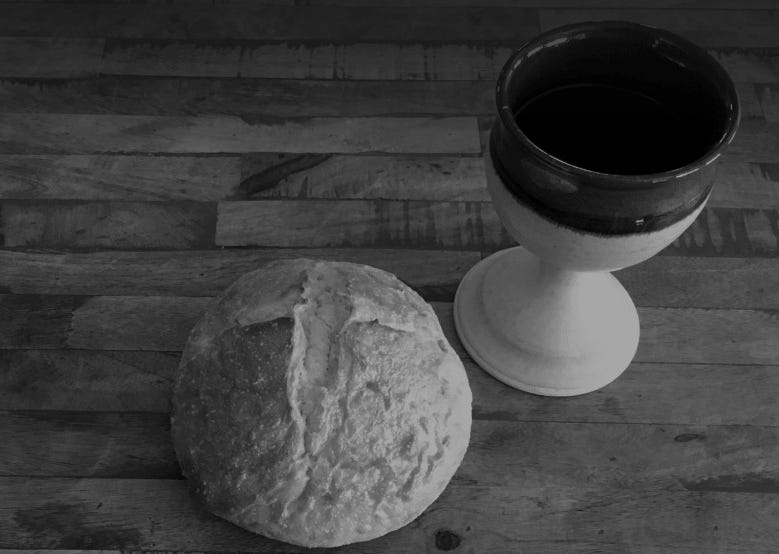
“While they were eating, Jesus took bread, and when he had given thanks, he broke it and gave it to his disciples, saying, ‘Take it; this is my body.’ Then he took a cup, and when he had given thanks, he gave it to them, and they all drank from it. ‘This is my blood of the covenant, which is poured out for many,’ he said to them. ‘Truly I tell you, I will not drink again from the fruit of the vine until that day when I drink it new in the kingdom of God.’ When they had sung a hymn, they went out to the Mount of Olives” (Mark 14:22–26).
It was always one of the most moving services of the year for me. Indeed, every Lord’s Day is a joy for the pastor who loves Christ and His Church. I have loved leading the people of God in worship, praying for them as my eyes rested upon the congregation before offering the Call to Worship. Public worship is the central act of pastoral ministry in the life of the Church: there the shepherd feeds the flock, and there the Lord gathers His people, including those whom He is even then drawing to Himself.
Yet Maundy Thursday possesses a particular tenderness. The setting is intimate. The drama is quiet, yet filled with eternal consequence. Heaven’s purpose meets the ordinary elements of daily life—bread, cup, table, fellowship. “So, love one another.” “Do this in remembrance of Me.” Mandatum: to love, to remember. The two are inseparable. “We love because he first loved us” (1 John 4:19).
No greater love could be shown than that our Creator became the Created in order to suffer and die for our sins, and to rise again for our salvation (Phil. 2:6–8; Rom. 4:25). Here is love beyond imagination. Every lesser love finds its meaning in His love. The Passover reaches its fulfillment in Christ, “our Passover lamb” who “has been sacrificed” (1 Cor. 5:7). His blood, shed for us and received by faith, marks the doorposts of our lives (Exod. 12:13; Heb. 9:12–14). His body, given for us, becomes the sign and seal of the covenant of grace.
Hurry, then—not in panic, but in faith. The greater Exodus has begun—not through the Sinai wilderness, but through the cross to the empty tomb (Luke 9:31). There is our deliverance. There is our Promised Land. There is abundant life and life eternal (John 10:10; 17:3).
Take and eat. Drink of it, all of you (Matt. 26:26–28). For as often as we eat this bread and drink the cup, we proclaim the Lord’s death until He comes (1 Cor. 11:26).
Prayer (BCP)
Almighty Father, whose dear Son, on the night before he suffered, did institute the Sacrament of his Body and Blood: Mercifully grant that we may receive the same thankfully in remembrance of Jesus Christ our Lord. Amen.
GOOD FRIDAY
Prayer at the Cross

About This Day
Good Friday remembers the crucifixion of Jesus Christ, in which the Son of God offered Himself for the redemption of the world.
“And Jesus said, ‘Father, forgive them, for they know not what they do’” (Luke 23:34).
One is tempted to put aside every book of philosophy. Even the most faithful works of theology seem to fall silent before the depth of this moment. The Creator is crucified by His creation. He is nailed to the timber of a tree that He Himself brought into being. The metals drawn from the earth and shaped by human hands are His as well. Creation itself appears to recoil at what we now confess as our salvation. The heavens grow dark, the earth trembles (Matt. 27:45, 51). The angels look on in wonder at mysteries into which they long to look (1 Pet. 1:12). How can this be?
Almighty God in the flesh looks upon those whom He has made—those who mock Him, curse Him, and turn away. He sees His mother. He sees the beloved disciple John (John 19:26–27). Through blood-dimmed eyes, beneath the cruel weight of the crown of thorns, bearing the agony of crucifixion, the Lord of life yields Himself to death on our behalf—willingly, covenantally, redemptively (Isa. 53:5–6; John 10:18). And in the midst of unspeakable suffering, He prays: “Father, forgive them.”
All earthly love is now measured by this love. Here is love that humbles the proud heart and breaks the hardened one. Across the centuries, countless souls have bowed before the Crucified and said, “I am Yours.” We who were once part of the rebellion that nailed Him to the cross are now, by grace, made members of His family (Rom. 5:8–10). Those who cursed His name have come to proclaim it. Those who stood far off have drawn near through His blood (Eph. 2:13). Even those who failed Him were restored and sent forth in His strength.
Here is the Gospel of grace, lifted up for all to see, that all may come (John 12:32). Here we learn to pray in a new way: not that God would destroy our enemies, but that they might be drawn to Him through the testimony of His redeeming love. For at the cross we see both the judgment of sin and the mercy of God meet together (Ps. 85:10). And we hear the prayer that teaches us how to pray: “Father, forgive.”
O, my God. My Savior. Shape my prayer life so that I, too, will sing:
Love so amazing, so divine,
demands my soul, my life, my all.
Prayer (BCP)
Almighty God, we beseech thee graciously to behold this thy family, for which our Lord Jesus Christ was contented to be betrayed, and given up into the hands of wicked men, and to suffer death upon the cross. Amen.
HOLY SATURDAY
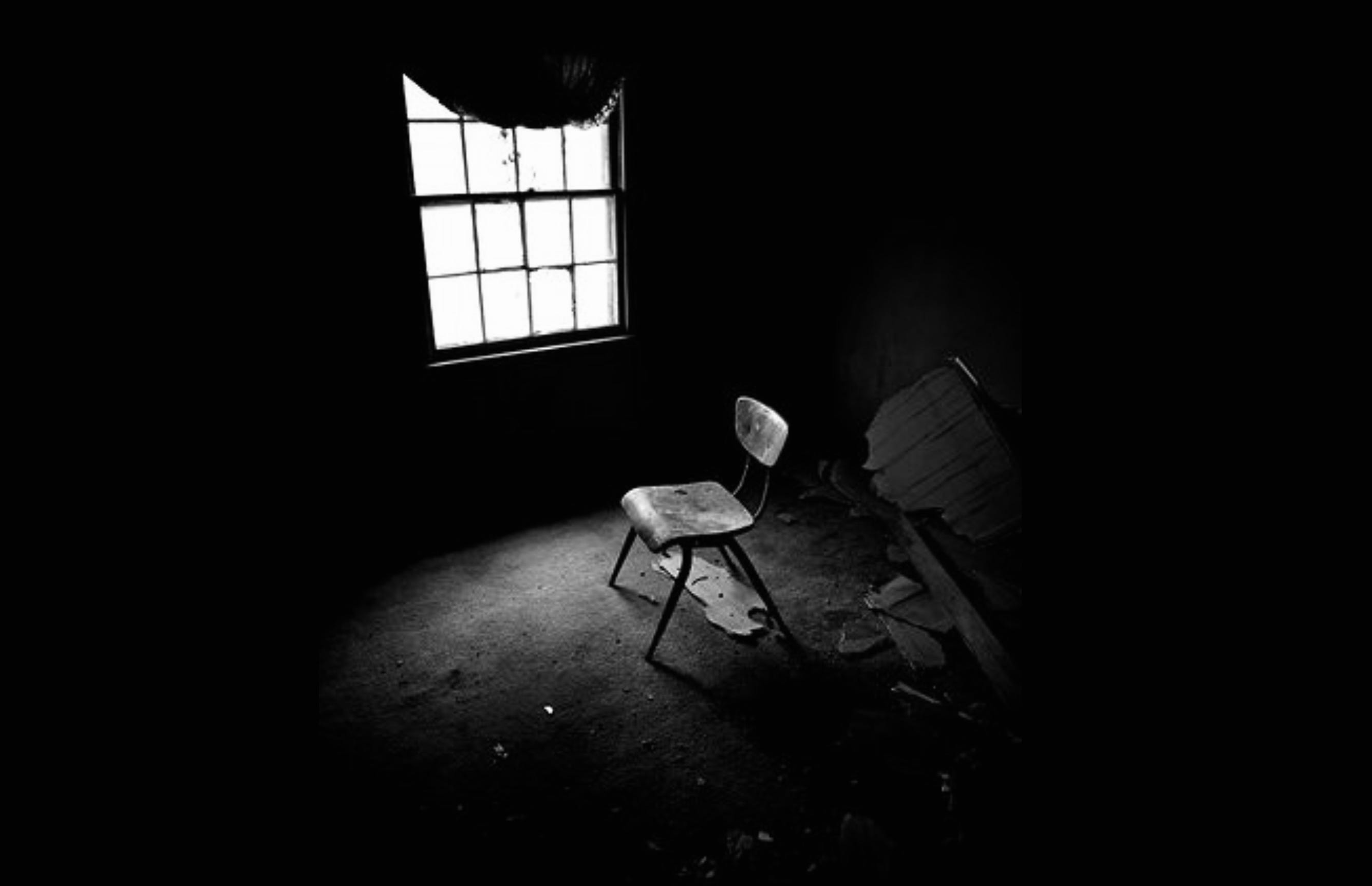
Prayer that Waits in Hope
About This Day
Holy Saturday marks the day of waiting between the crucifixion and the resurrection, when the Church remembers the mystery of Christ’s rest in the tomb and learns to trust in the hidden work of God.
“It is good that one should wait quietly for the salvation of the LORD” (Lamentations 3:26).
“Wait here.”
I spoke those words to one who came to me burdened by a darkness that would not lift. All tragedies feel singular to those who endure them. Each sorrow is draped with its own funeral pall, stitched from threads of love and loss that were never meant to be woven together, yet inevitably are. That night, I stood with aging grandparents and their surviving granddaughter. Their daughter—the child’s mother—had died in an instant, together with her husband and two of their three children. A familiar road. A late hour. No storm to blame. No villain easily named. Death is always an intruder, the bitter fruit of a fallen world. Yet in this case there seemed no clear answer, no simple assignment of fault. There were mistakes, perhaps, but tragedy rarely permits the tidy conclusions we seek. They were—and then they were not. Three seconds. Two. One. The glare of headlights. The unalterable moment of impact.
The officer on the scene wept. I wept so deeply inside that I had no tears to express my pain. So, I understood as I saw them: the grandparents and the little girl stood in stunned silence. Shock had stilled their tears. Grief had not yet found its voice.
All who have lost a loved one—a father or mother, a husband or wife, a child, a friend, a brother-in-arms—know something of the searing pain of death. The question inevitably comes: What do we do with such sorrow? Where do we go now? How shall we continue? I am not untouched by the silence that lingers before the sealed tomb. And so, on that night, I held those grandparents and that little girl as best I could, my arms insufficient for so great a wound.
Some weeks later, on a Lord’s Day morning, they met me at the church door. Their eyes bore questions that words could scarcely carry. The soul sometimes speaks through silence more deeply than through speech. “Where do we go from here?” they seemed to ask. And I heard myself answer quietly, “Wait here.” They looked puzzled. What could such words mean? Wait here? Yes—here, in this world still marked by sorrow, yet not abandoned by God. Here, where His presence is mediated through His people. Here, where others have learned to sing doxologies in the night. Here, where we take the bread and the cup to our lips, where we sing, When I Survey the Wondrous Cross, where we comfort one another with a Word from Another World.
Waiting is what happened on that Saturday in the borrowed tomb of a rich man, where the body of Jesus lay (Matt. 27:57–60). The world did not yet see what heaven already knew. Until, at the mysterious meeting point of time and eternity, light filled the darkness, and death’s dominion was broken.
What do we do with death? We wait. But we wait with certain hope.
John Donne, who wrote so powerfully about the frailty of Man and the triumph of Christ, reminds us that death does not have the final word:
Death, be not proud, though some have called thee
Mighty and dreadful, for thou art not so;
For those whom thou think’st thou dost overthrow
Die not, poor Death, nor yet canst thou kill me.
From rest and sleep, which but thy pictures be,
Much pleasure; then from thee much more must flow,
And soonest our best men with thee do go,
Rest of their bones, and soul’s delivery.
Thou art slave to fate, chance, kings, and desperate men,
And dost with poison, war, and sickness dwell,
And poppy or charms can make us sleep as well
And better than thy stroke; why swell’st thou then?
One short sleep past, we wake eternally
And death shall be no more; Death, thou shalt die.
— John Donne (1572–1631)11
Holy Saturday teaches us that the silence of God is not the absence of God. The waiting of faith is not empty. The grave is not the end. In Christ, even the longest night gives way to morning (Ps. 30:5).
So just wait, wait here. Easter morning is coming.
Prayer (BCP)
Grant, O Lord, that as we are baptized into the death of thy blessed Son our Savior Jesus Christ, so by continual mortifying our corrupt affections we may be buried with him; and that through the grave and gate of death we may pass to our joyful resurrection; through the same our Lord Jesus Christ. Amen.
Holy Saturday teaches us that the silence of God is not the absence of God. The waiting of faith is not empty. The grave is not the end. In Christ, even the longest night gives way to morning (Ps. 30:5). — Michael A. Milton
EASTER SUNDAY
Prayer Grounded in the Promise Fulfilled

About This Day
Easter Sunday proclaims the resurrection of Jesus Christ, the victory over sin and death, and the promise of new life for all who believe.
“He is not here, for he has risen, as he said” (Matthew 28:6).
“As he said.” There is a sermon in that phrase alone. Resurrection Sunday reminds us that Jesus not only died but also laid down His life and took it up again (John 10:18). No one else can do this. Others in Holy Scripture were taken by God without experiencing death, such as Enoch, who “walked with God, and he was not, for God took him” (Gen. 5:24). Elijah was taken up in a chariot of fire (2 Kings 2:11). The body of Moses was kept by God in mystery, guarded even against profanation (Deut. 34:5–6; Jude 9). The Lord raised the widow’s son through Elijah (1 Kings 17:22), the Shunammite woman’s son through Elisha (2 Kings 4:35), Jairus’ daughter (Mark 5:41–42), and Lazarus (John 11:43–44). Matthew tells us that following Christ’s death, many of the saints’ bodies were raised as a sign of what was to come (Matt. 27:52–53). In many ways, God had been preparing the world for resurrection all along.
Yet the resurrection of Jesus is altogether unique. These others were restored to life only to die again. Jesus rose never to die again (Rom. 6:9). The atonement was accomplished. The perfect obedience required for righteousness was fulfilled. The sacrifice sufficient for all who trust in Him was offered once for all (Heb. 10:10–14). What had long been promised, foreshadowed, and foretold was now fulfilled openly and decisively.
He is risen. And that changes everything.
It changes our present. It changes our past. And it changes our future.
Because Christ is risen, the burden of the fear of death is lifted. “Death is swallowed up in victory” (1 Cor. 15:54). We are freed from the tyranny of the grave (Heb. 2:14–15). Because Christ is risen, the wounds of loss are met with hope. The resurrection is a healing balm applied to our grief, for we do not sorrow as those who have no hope (1 Thess. 4:13–14). Because Christ is risen, we live in the certainty that we shall not remain disembodied spirits, but shall receive bodies fit for the restored creation—Paradise regained, Eden redeemed (1 Cor. 15:42–49; Rev. 21:1–5).
Resurrection is no late invention in the Bible. The hope of life triumphing over death pulses through the entire revelation of God. From the promise that the seed of the woman would crush the serpent (Gen. 3:15), to Job’s confession, “in my flesh I shall see God” (Job 19:26), to the prophetic vision that God will swallow up death forever (Isa. 25:8), the Scriptures steadily prepare us for this morning.12 The resurrection of Jesus Christ stands at the center point of history, the great turning of the ages, the assurance that God’s promises are true.
And your life? Jesus said, “Whoever hears my word and believes him who sent me has eternal life… He has passed from death to life” (John 5:24). Even now, the life of the age to come has begun in all who trust in Him. It remains for the Lord to complete His work in the resurrection of the body and the renewal of all things.
This is not a mere religious sentiment. This is the Word of God. This is the promise first spoken in Eden—that what was lost through sin would be restored through the Redeemer (Rom. 5:17–21). Christ is risen. And because He lives, we also shall live (John 14:19).
Just “as He said.”
“For I am sure that my Redeemer liveth, and he shall stand the last on the earth. And though after my skin worms destroy this body, yet shall I see God in my flesh” (Job 19:25-26 Geneva Bible). —If Job is, indeed, the oldest book of the Bible, then this is the first of many instances of resurrection in the Old and New Testaments.
Prayer (BCP)
Almighty God, who through thine only-begotten Son Jesus Christ hast overcome death and opened unto us the gate of everlasting life: Grant that we, who celebrate with joy the day of the Lord’s resurrection, may be raised from the death of sin by thy life-giving Spirit; through Jesus Christ our Lord. Amen.
The phrase paschal mystery is employed here in continuity with its early patristic usage (e.g., Melito of Sardis) to signify the once-for-all saving work of Jesus Christ in His Passion and Resurrection (1 Cor. 5:7; Heb. 10:10), understood in the Reformed tradition as the completed historical act of redemption rather than a repeated sacramental offering.
See Melito of Sardis, On Pascha, in Melito of Sardis: On Pascha and Fragments, trans. Stuart George Hall (Oxford: Clarendon Press, 1979), §§65–67.
For those interested, see a devotional commentary on this subject by Hans Urs von Balthasar, Mysterium Paschale: The Mystery of Easter, trans. Aidan Nichols, O.P. (Grand Rapids: William B. Eerdmans Publishing Company, 1993). Originally published as Theologie der Drei Tage (1969), the work presents a theological meditation on the Passion, descent of Christ, and Resurrection as the climactic saving act of God in history.
John Donne, “Holy Sonnet X,” in John Donne: The Major Works, ed. John Carey (Oxford: Oxford University Press, 1990), 173.
John Calvin, Institutes of the Christian Religion, trans. Henry Beveridge (Peabody, MA: Hendrickson, 2008), 3.20.2.
Ole Hallesby, Prayer, trans. Clarence J. Carlsen (Minneapolis: Augsburg Publishing House, 1931), 12.
Thomas Merton, Contemplative Prayer (New York: Image Books, 1969), 44.
Augustine, Confessions, trans. Henry Chadwick (Oxford: Oxford University Press, 1991), 3.
We do not dismiss the traditional forms of prayer, such as the “collects” (ka’-lekts), which follow the outline of the Lord’s Prayer, but we do not want to imply that prayer is only effective when the proper form is used. “O God, help me” is a powerful prayer that is elegant because of its focus on God; its approach, helplessness; its faith, that God is present and can change things since He is Almighty; and its authority, God revealed in Creation and in Revelation, that is, Scripture. Since all things are made for and exist through the Lord Jesus, approaching the throne of God in prayer is done in the authority of Jesus. It’s best to name Him in our prayers, but prayer’s power, like all our helps or virtues, is a gift. If our prayers are effective, it is because of God, for no one will boast (Ephesians 2:8, 9).
Ole Hallesby, Prayer, trans. Clarence J. Carlsen (Minneapolis: Augsburg Publishing House, 1931), 12–15.
Hallesby, 33.
The prayers that follow at the conclusion of each day in the Holy Week devotions are “collects” from the Protestant Episcopal Church in the United States of America. The Book of Common Prayer. New York: Oxford University Press, 1928.
John Donne, “Holy Sonnet X,” in John Donne: The Major Works, ed. John Carey (Oxford: Oxford University Press, 1990), 173.
I always used Job 19:26 at the graveside service. There amidst the tombs stands the Promise of all Promises: this place shall be unearthed, and the bodies of the faithful in Christ shall be raised. “Dust to dust” is not the end. There is one more stanza to the story:
23 Oh that my words were now written! Oh, that they were written even in a book,
24 And graven with an iron pen in lead, or in stone forever!
25 For I am sure that my Redeemer liveth, and he shall stand the last on the earth.
26 And though after my skin worms destroy this body, yet shall I see God in my flesh.
27 Whom I myself shall see, and mine eyes shall behold, and none other for me, though my reins are consumed within me” (Job 19:23-27 Geneva Bible).
Bibliography
Praying Holy Week
Protestant Episcopal Church in the United States of America. The Book of Common Prayer. New York: Oxford University Press, 1928.
Augustine. Confessions. Translated by Henry Chadwick. Oxford: Oxford University Press, 1991.
Balthasar, Hans Urs von. Mysterium Paschale: The Mystery of Easter. Translated by Aidan Nichols, O.P. Grand Rapids: William B. Eerdmans Publishing Company, 1993.
Baxter, Richard. The Reformed Pastor. Edinburgh: Banner of Truth Trust, 1974.
Beeke, Joel R., and Terry D. Slachter. Encouragement for Today’s Pastors: Help from the Puritans. Grand Rapids: Reformation Heritage Books, 2013.
The Book of Common Prayer. 1662. Oxford: Oxford University Press, 1762. Reprint, Cambridge: Cambridge University Press, 2006.
Bucer, Martin. Concerning the True Care of Souls. Translated by Peter Beale. Carlisle, PA: Banner of Truth Trust, 2009.
Calvin, John. Commentary on the Gospel According to John. Translated by William Pringle. Grand Rapids: Baker Book House, 2003.
Calvin, John. Institutes of the Christian Religion. Translated by Henry Beveridge. Peabody, MA: Hendrickson Publishers, 2008.
Donne, John. Devotions upon Emergent Occasions. Ann Arbor: University of Michigan Press, 1959.
Donne, John. “Holy Sonnet X: Death Be Not Proud.” In John Donne: The Major Works, edited by John Carey, 173. Oxford: Oxford University Press, 1990.
Gregory the Great. The Book of Pastoral Rule. Translated by George E. Demacopoulos. Crestwood, NY: St. Vladimir’s Seminary Press, 2007.
Hall, Stuart George, trans. Melito of Sardis: On Pascha and Fragments. Oxford: Clarendon Press, 1979.
Hallesby, Ole. Prayer. Translated by Clarence J. Carlsen. Minneapolis: Augsburg Publishing House, 1931.
The Holy Bible, English Standard Version. Wheaton, IL: Crossway Bibles, 2016.
Luther, Martin. Luther’s Works. Edited by Jaroslav Pelikan and Helmut T. Lehmann. 55 vols. St. Louis: Concordia Publishing House; Philadelphia: Fortress Press, 1955–1986.
Merton, Thomas. Contemplative Prayer. New York: Image Books, 1969.
Owen, John. The Mortification of Sin. Edinburgh: Banner of Truth Trust, 2004.
Perkins, William. The Art of Prophesying. Carlisle, PA: Banner of Truth Trust, 1996.
Percy, Walker. The Message in the Bottle. New York: Farrar, Straus and Giroux, 1975.
Percy, Walker. Signposts in a Strange Land. Edited by Patrick Samway, S.J. New York: Farrar, Straus and Giroux, 1991.
Schaeffer, Francis A. The God Who Is There. Downers Grove, IL: InterVarsity Press, 1968.
Turretin, Francis. Institutes of Elenctic Theology. Translated by George Musgrave Giger. Edited by James T. Dennison Jr., 3 vols. Phillipsburg, NJ: P&R Publishing, 1992–1997.
Watts, Isaac. Hymns and Spiritual Songs. London, 1707. Reprint, in The Works of Isaac Watts, D.D., vol. 9. Leeds: Edward Baines, 1813.
Westminster Assembly. The Westminster Confession of Faith; Together with the Larger Catechism and the Shorter Catechism. Glasgow: Free Presbyterian Publications, 2003.
Thoroughly … beautiful. Pastoral. Powerful. Well worth the wait my friend. Grateful that God works so beautifully through you.