

Wisdom Cries as Asses Bray
A Reflection on Violence and Anarchy, Hope and Healing

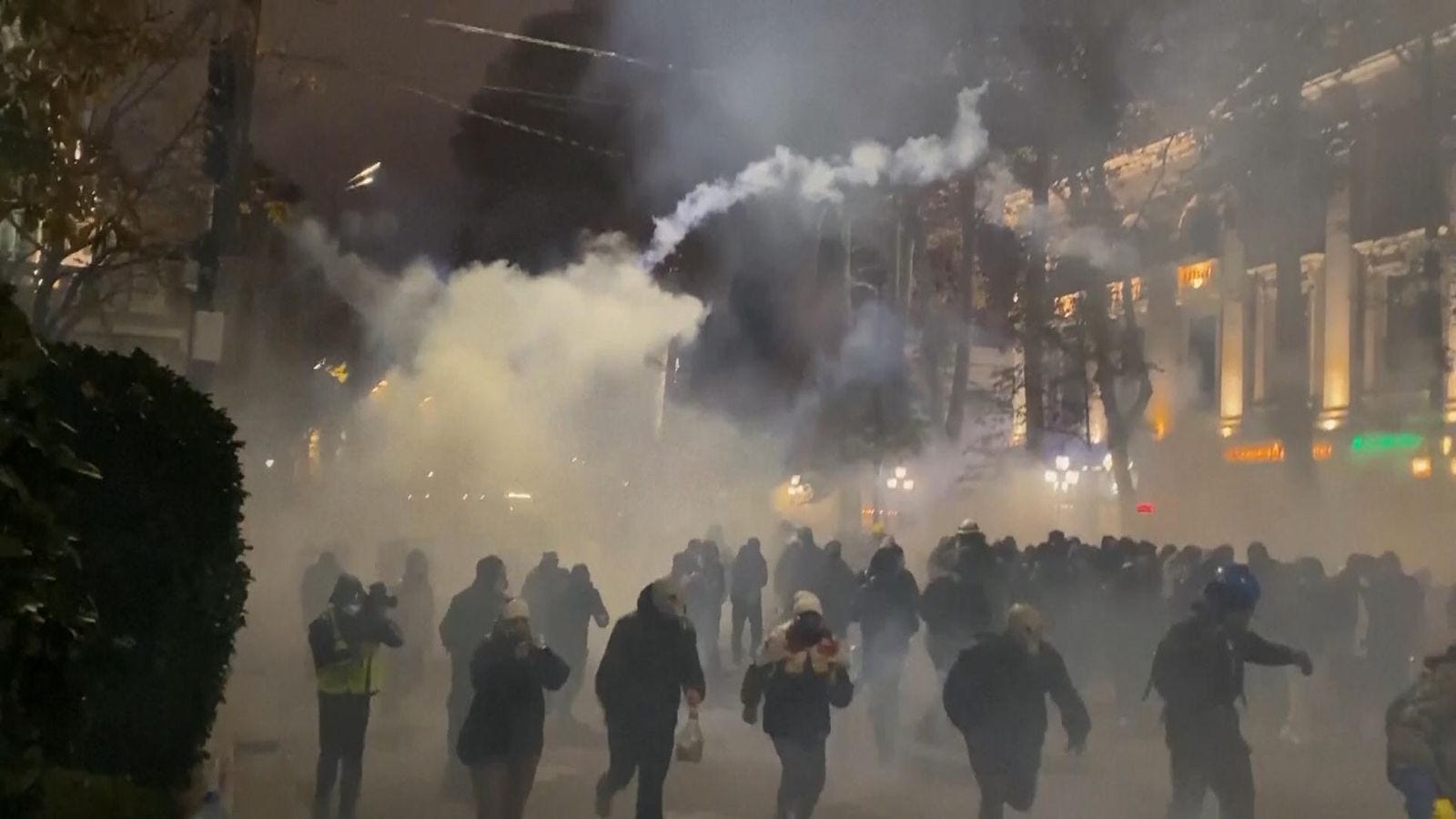
“Wisdom cries aloud in the street, in the markets she raises her voice” (Proverbs 1:29 ESV).
“Worry is the misuse of imagination,” wrote Frederick Buechner. Yet our concerns grow day by day and breed something very much like worry. For when civil leaders incite unrest, stoke violence, or contemptuously resist lawful authority, the predictable result is not “justice,” but confusion, harm to the innocent, and the spread of lawlessness. Scripture teaches that when rulers abandon moral restraint, they do not liberate the vulnerable—they deliver the public into danger (Prov. 29:2; Judg. 21:25).
Shards of glass lie buried in the winter wonderland called Minnesota, but the ice and the glass are indistinguishable. One glistens in the winter sun, and the other terrorizes in lawless night. One evokes wonder. The other pain. Be careful.
In more than one once-great city, civic leaders have played with matches in a dry forest—stoking resentment, taunting lawful authority, and baptizing disorder with moral language. Now they stand surprised at the predictable flame. Having provoked hostility toward federal law enforcement officers who are charged to uphold the law and restrain evil, they are witnessing the eager obedience of paid agitators and the restless energy of naïve nonconformists who confuse chaos with courage (Prov. 29:2; Judg. 21:25).
None of this should mystify us. When leaders reward disorder, disorder multiplies. When law is mocked, lawlessness spreads. When those appointed to restrain harm are made into villains, harm enjoys a brief holiday in the streets (Rom. 13:1–4; 1 John 3:4).
Did you see the Minneapolis police chief’s eyebrows rise whenever the mayor suggested that some want the police force to fight federal authorities in the streets? It did not appear that anyone had briefed the chief about the possibility of going to war with federal agents. His instinctive remarks about law and order revealed a tear in the fabric of an agenda that cannot survive contact with reality.
So we join with many others in our nation today—raising eyebrows in disbelief at irresponsible governance, and with a hesitant yet real expectation of tragedy upon tragedy if it is not stopped.
Scripture is plain: “Sin is lawlessness” (1 John 3:4). The Lord “hates the wicked and the one who loves violence” (Ps. 11:5). And whenever every man becomes his own moral law, the outcome is not liberation but fracture: “Everyone did what was right in his own eyes” (Judg. 21:25). A society cannot call anarchy “freedom” and then act astonished when the innocent bleed.
We may quarrel about policies—and in a republic, we often should. But moral anarchy is not policy. It is spiritual rot. And the Bible is unembarrassed to say so. Samuel’s warning still falls like a stone into the civic pond: “Rebellion is as the sin of divination, and presumption is as iniquity and idolatry” (1 Sam. 15:23). Rebellion is not merely political drama. It is theological defiance. It is the heart insisting it will be its own god.
There are, of course, rare exceptions in history when resistance to tyranny becomes morally necessary. But there is no tyranny in federal agents seeking to arrest criminals and restrain the wicked.
This is why Romans 13 remains one of the most countercultural texts in modern America. It does not flatter the State, but it refuses to treat public order as optional. “There is no authority except from God, and those that exist have been instituted by God” (Rom. 13:1). Civil government is described as a servant—“God’s servant for your good” (Rom. 13:4). It bears the sword, not as an accessory of tyranny, but as a sober authorization to punish wrongdoing: “He does not bear the sword in vain” (Rom. 13:4). Peter echoes the same: governors are sent “to punish those who do evil and to praise those who do good” (1 Pet. 2:14).
This does not mean civil leaders are always righteous. It means that order itself is merciful. When it is preserved, the vulnerable have a measure of shelter. When it collapses, the vulnerable are the first to pay. That is why it is so corrupting to treat law enforcement as the enemy of the people. In a fallen world, the presence of law—properly administered—is a kind of common grace. The alternative is the oldest tyranny of all: the strong ruling the weak through fear.
And let us be honest about the tone of this hour. When vulgarity becomes public speech and intimidation becomes persuasion, we are not watching moral awakening. We are watching the decay of restraint. The Apostle Paul describes societies that suppress truth and tumble into moral confusion, and he does not portray them as noble rebels but as a people “given up” to what they demand (Rom. 1:24, 26, 28).
If you want the Scripture’s logic in a sentence, here it is: what we tolerate in public today becomes what we suffer in private tomorrow (Gal. 6:7–8).
“Wisdom cries aloud in the street,” Proverbs says (Prov. 1:20). Not in the sanctuary only, and not in whispers. Wisdom raises her voice in public because public sin has public consequences. Yet her voice is increasingly drowned out—by profanity-laced ranting and by slogans from those catechized into believing that restraint is cruelty and order is oppression (Prov. 1:20–33). Wisdom is not found in shrieks against federal agents, nor in the calculated taunting of lawful authority. These are not the voices of prophets. They are the braying of fools.
But listen to the cry of wisdom.
Wisdom says that those who refuse correction will eventually meet correction anyway—only it will arrive as calamity (Prov. 1:26–27). She says those who love disorder will eat the fruit of their ways (Prov. 1:31). And when judgment comes, it is not always a bolt from the sky. Sometimes it is the slow, measurable misery of a culture turning itself inside out. Isaiah names the moral inversion that follows: “Woe to those who call evil good and good evil” (Isa. 5:20). Our Lord warns that “because lawlessness will be increased, the love of many will grow cold” (Matt. 24:12).
The crisis may appear confined to certain urban centers, but such a view is dangerously short-sighted. Lawlessness is contagious. It spreads like a sickness where truth is despised, and restraint is mocked (1 John 3:4; Prov. 29:18). In the days of Noah, the earth was “filled with violence,” and God judged that corruption with a flood (Gen. 6:11–13). Yet even then, God set His covenant sign in the sky: “I have set my bow in the cloud” (Gen. 9:13). The rainbow remains a testimony that God governs history, keeps His Word, and shows mercy even after judgment (Gen. 9:13–16). Whatever an age tries to steal or redefine, God’s covenant cannot be hijacked.
Thus, we must remember this as well: “God is not mocked” (Gal. 6:7). The nation still has time—today—by God’s patience, to turn again (Acts 17:30; 2 Pet. 3:9). There is still time to cry aloud—not with the rage of the streets, but with the compassion of the Gospel—that men and women, and boys and girls, must return to Jesus Christ. There is simply no other way (John 14:6; Acts 4:12).
Yet the Christian is not called to become a cynic, nor to retreat into contempt. We are commanded to tell the truth, resist evil lawfully, and still love our neighbors—without sentimentality. Flannery O’Connor captured that tension with a sentence as sharp as a scalpel: “You have to cherish the world at the same time that you struggle to endure it.”¹
And still—astonishingly—God’s Word does not end in exposure. It ends in mercy. After devastation comes a promise that sounds almost too tender to believe: “I will restore to you the years that the swarming locust has eaten” (Joel 2:25). That is not permission to linger in rebellion. It is God’s invitation to return while there is still time.
So let us repent. Let us seek God in acts of service, in the protection of the defenseless, and in honoring the earthly ministers of God’s government (Rom. 13:1–4). Let us remove fools from power by lawful means and constitutional remedies—not by mobs, but by justice (Deut. 16:20; Prov. 29:2). And above all, let us return—starting with our own hearts—to the Lord Jesus Christ, who alone can cleanse what policy cannot heal and restore what ideology has devoured (John 14:6; 2 Cor. 5:17).
Frederick Buechner, with bracing tenderness, brings us home:
“The worst isn’t the last thing about the world… The last, best thing is the laughing deep in the hearts of the saints… Yes. You are terribly loved and forgiven. Yes. You are healed. All is well.”²
The present situation is not all well. But it is not yet the end of the story.
Footnotes
Flannery O’Connor, A Good Man Is Hard to Find (New Brunswick, NJ: Rutgers University Press, 1993), 129.
Frederick Buechner, The Final Beast (New York: Harper & Row, 1965).