

The Transparency Question in Higher Education Closing Article in Carolina Journal
Christians in the Public Square

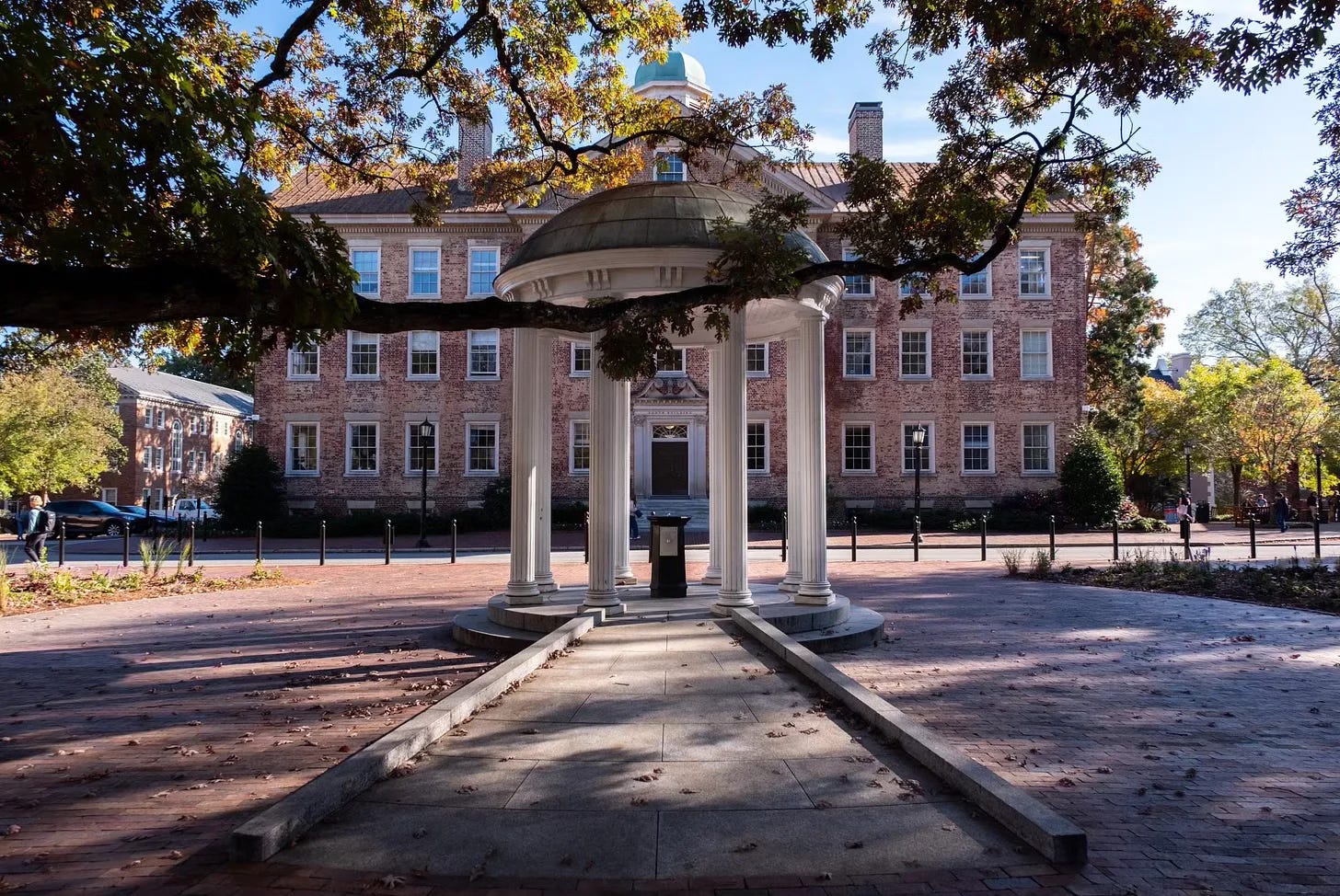
This is the concluding article and report to you on our campaign (one battle in the larger defense of the Gospel).
Tonight’s Post
Today, Carolina Journal, a publication of the John Locke Foundation, published my second—and concluding—article in a strategic public-policy campaign supporting the UNC System’s mandate for greater transparency in North Carolina university classrooms and for the restoration of academic integrity in taxpayer-supported higher education.
Silence in the face of institutional drift is not humility; it is neglect.” — Michael A. Milton
The article is titled “Transparency Isn’t the Enemy of Academic Freedom.”
Yahoo News, USA Today, and other outlets have already picked up the piece. That reach is not accidental. It reflects a measured and intentional approach to public-policy engagement—one that aims not merely to react, but to present a coherent vision over time. While no campaign is perfect, this article still has legs and may yet reach academic and policy journals that can advance the conversation further.
That strategy—and the values behind it—lie at the heart of what I have elsewhere described as the Church being “silent no more” in the public square.
From Op-Ed to Policy Engagement
As many readers know, this campaign began with an op-ed in the Asheville Citizen-Times, where I argued that syllabus transparency is not a threat to academic freedom. Instead, openness reinforces the trust essential to healthy universities and helps confront ideological capture—wherever it has taken hold in publicly funded institutions.
The immediate occasion for that exchange was a response to a faculty member at Western Carolina University. From the outset, I sought to proceed with humility, restraint, and fairness—principles shaped by a lifetime of military service, pastoral ministry, and work in higher education.
Why Method Matters
Because several readers have asked how I approach public debates of this kind, I have made available a brief, stand-alone statement titled:
How I Engage Public Policy: A Statement of Method and Conviction
In it, I outline principles I have also taught to young pastors and Christian leaders preparing to serve as thoughtful voices in their communities—bringing the Gospel of Jesus Christ to bear in a fragmented, post-Christian moral landscape. The goal is not to “win” arguments, but to seek human flourishing that leads, in the words of Scripture, to “a peaceful and quiet life, godly and dignified in every way” (1 Tim. 2:2).
Within that calling, the Gospel advances not primarily through spectacle or outrage, but through ordinary faithfulness—often quiet, always dependent on the mysterious and beautiful work of God.
How I Engage Public Policy: A Statement of Method and Conviction
https://michaelamilton.substack.com/p/on-engaging-public-policy-debates
Back to the Debate: Why This Matters
A Christian Perspective (FAQ)
Why is transparency in public education important?
“Transparency is essential because truth flourishes in the light. Public institutions supported by the people owe the people clarity about what is taught in their name.”
Transparency strengthens trust, protects academic freedom rightly understood, and ensures universities serve their public mission rather than hidden ideological agendas.
Why would a Christian minister and educator engage this issue?
“A Christian minister speaks when truth, justice, and human dignity are at stake—not to control the academy, but to call it back to its proper purpose.”
Silence in such matters is not neutrality; it is abdication of moral responsibility.
Is this about imposing religion on public education?
“This is not about imposing faith, but about opposing coercive ideologies that crowd out genuine intellectual diversity.”
Christians support transparency so that all ideas may be examined honestly.
What is at stake for believers in public education?
“What is at stake is the formation of the next generation—how they are taught to understand truth, freedom, authority, and the human person.”
When ideologies hostile to faith and Western moral tradition dominate unchecked, believers—and their children—are not merely excluded but misrepresented.
Why should Christians care about academic freedom?
“Christians should defend academic freedom precisely because we believe truth can withstand examination.”
Faith has nothing to fear from open classrooms.
Why speak now?
“Silence in the face of institutional drift is not humility; it is neglect.”
This moment calls for measured, principled speech—rooted in Scripture, reason, and concern for the common good.
Resources (Offered Humbly)
I offer the following resources not as prescriptions, but as fodder—materials that may help others clarify their own convictions as they engage culture thoughtfully and faithfully.
Milton, Michael A. Philosophy of Teaching and Learning. 2024. Postdoctoral Certification in Teaching and Learning, Harvard University. figshare. https://doi.org/10.6084/m9.figshare.26117941.v1
Milton, Michael A. 2026. “On Engaging Public Policy Debates with Intention and Integrity.” Notes to Self on Various Subjects (Substack), January 5, 2026.
https://michaelamilton.substack.com/p/on-engaging-public-policy-debatesLiberty & Classism: Understanding the Political Philosophy of Leftist Elites, The D. James Kennedy Institute of Reformed Leadership Essays, Book 2. Kindle edition.
https://amzn.to/49Ev02B
May the Lord grant you the fullness of the presence and power of Christ in every way.
