

A Beautiful Inheritance: Thanksgiving, Providence, and the Hope of Resurrection
Psalm 16 — Thanksgiving Day, 2025

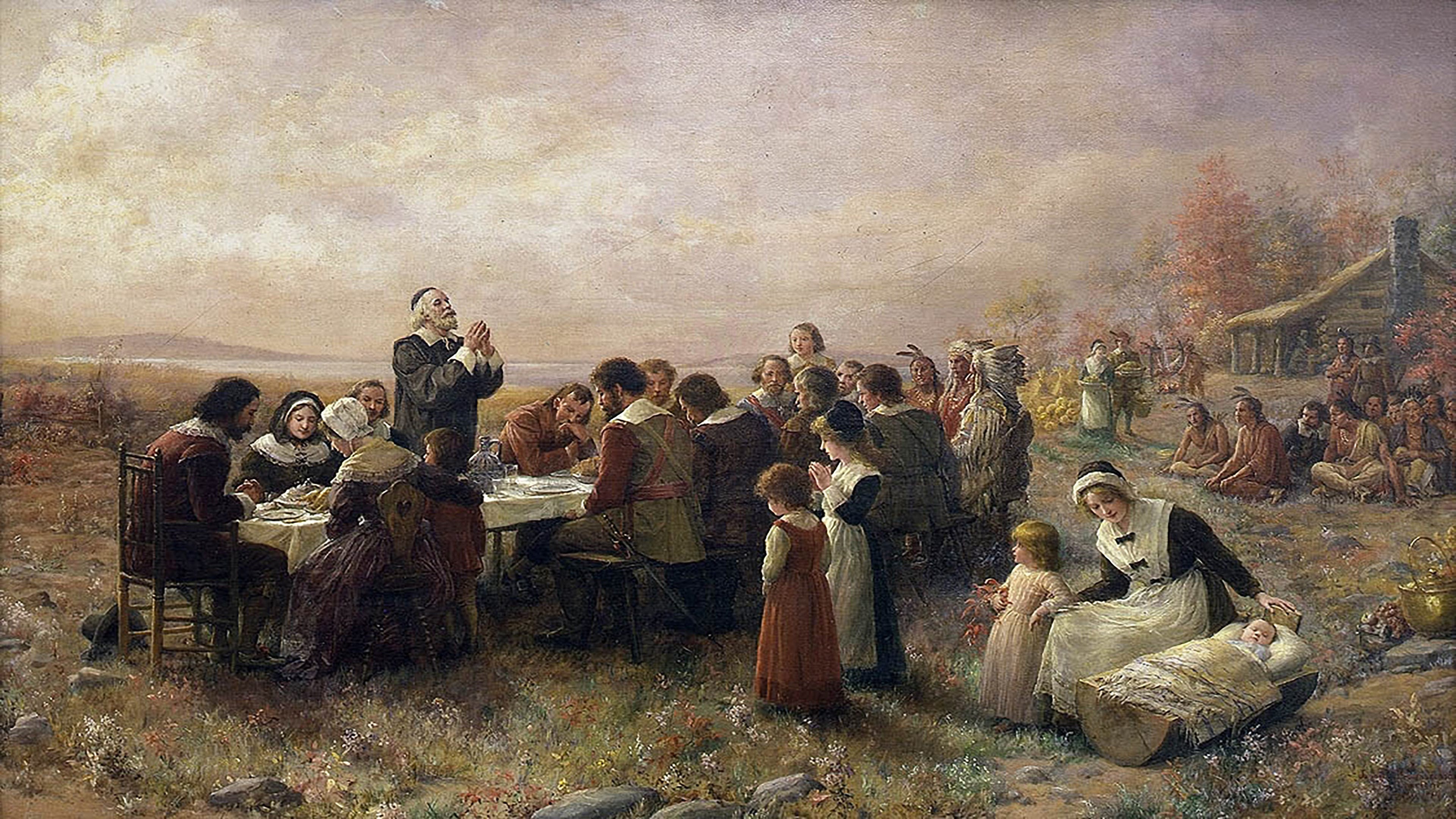
On this Thanksgiving Day, Psalm 16 teaches us that the deepest gratitude flows not from comfort or plenty, but from our beautiful inheritance in Christ—His providence in life and His power over death.
I love to preach Jesus from the Psalms. And I love to preach Thanksgiving services. I remember a line that the great Southern author, Flannery O’Connor, used to describe her habits of writing: “I write because I don’t know what I think until I read what I say.”
I think we could borrow from that famous literary Lady of Milledgeville, Georgia, to say, “I thank God for everything—from a stove that works, from a good strong hot cup of coffee to a warm, flakey biscuit with strawberry jam, all the way to the most important things—because I don’t realize just how blessed I am until I start praying.” How did the old Gospel hymn put it?
“Count your blessings, name them one-by-one . . .”
Matthew Henry wrote of Psalm 16, “This psalm has something of David in it, but much more of Christ.” That is how we must approach this text on Thanksgiving Day. Psalm 16 is David’s song, yes — but it is also Christ’s. It is confidence in God in life and death, and it is our confidence too.
The Apostles understood this Psalm not merely as a reflection of David’s faith, but as a prophecy of Christ’s resurrection. Peter preached this Psalm at Pentecost when he said:
“God raised him up, loosing the pangs of death, because it was not possible for him to be held by it” (Acts 2:24).
And Paul, preaching his first recorded sermon, opened Psalm 16 to declare:
“You will not let your Holy One see corruption.”
David saw corruption — but Christ did not (Acts 13:34–36).
Thus, Psalm 16 is more than comfort — it is the Gospel.
Today, on Thanksgiving, we gather around a table and a text, and we echo David’s astonishing words:
“The lines have fallen for me in pleasant places; indeed, I have a beautiful inheritance” (Psalm 16:6).
This is the inerrant and infallible Word of the Living God.
 Preserve me, O God, for in you I take refuge.
2 I say to the Lord, “You are my Lord;
    I have no good apart from you.”
3 As for the saints in the land, they are the excellent ones,
    in whom is all my delight.[b]
4 The sorrows of those who run after[c] another god shall multiply;
    their drink offerings of blood I will not pour out
    or take their names on my lips.
5 The Lord is my chosen portion and my cup;
    you hold my lot.
6 The lines have fallen for me in pleasant places;
    indeed, I have a beautiful inheritance.
7 I bless the Lord who gives me counsel;
    in the night also my heart instructs me.[d]
8 I have set the Lord always before me;
    because he is at my right hand, I shall not be shaken.
9 Therefore my heart is glad, and my whole being[e] rejoices;
    my flesh also dwells secure.
10 For you will not abandon my soul to Sheol,
    or let your holy one see corruption.[f]
11 You make known to me the path of life;
    in your presence there is fullness of joy;
    at your right hand are pleasures forevermore.
“Our safety both in life and in death depends entirely upon our being under the protection of God.”—John Calvin on Psalm 16.
Opening Prayer
O Lord, may the words of my mouth and the meditation of our hearts be acceptable in Thy sight, O God, our Rock and our Redeemer (Psalm 19:14). And let me preach as if never to preach again — as a dying man to dying men. In Jesus’ name I pray. Amen.
Thanksgiving, as a national holiday to beseech the Almighty God of Abraham, Isaac, and Jacob, and our Lord Jesus Christ, was not mandated by the government of the United States out of full stomachs but a divine hunger—hunger for food and drink, hunger for peace and protection, and a humble acknowledgment that without God’s merciful intervention, we are lost. This remains true in this life. It also holds in the next. When prayer becomes provision, and gladness supplants gloom, we are thankful.
I. Thanksgiving Born in Trial
Thanksgiving, properly understood, is not an American festival of bounty. Therefore, it is not comparable to pagan harvest festivals. Additionally, Thanksgiving is not—and this is a new perspective—an artifact of oppressive white colonialism (I apologize for even suggesting such a ridiculous idea, but it is, surprisingly, gaining traction—a harmful concept that should be rejected quickly). Archaeological evidence, genetics, and tribal folklore all reveal that the continent experienced numerous waves of central and northern Asian tribes displacing others (thus, the first South Americans were likely refugees fleeing wars in North America). There was no unified nation called America. The Pilgrims in Plymouth, the settlers in Roanoke Island in present-day North Carolina, and Jamestown did not invade a nation. They arrived in a “new world” inhabited—at best—by largely independent nomadic tribes of Asian descent, and—at best—such groups were loosely allied for mutual defense and to prevent bloodshed through trade and land agreements. The presence of English (including Cornish, Scottish, Welsh) and Dutch settlers was a blessing to the land and its people, despite human sin and its consequences. God responded to their prayers with acts of divine providence, and those who believed expressed their thanks accordingly.
Thanksgiving is an American holiday rooted in our Founders’ experiences of God’s presence in their lives, a theme repeated throughout American history. The United States government (and its historical predecessors) established a day dedicated to public thanksgiving through worship, prayer, and covenantal meals to the Almighty God, fully revealed in the Old and New Testaments of the Holy Bible, for His providential favor on our people. Thanksgiving’s origins are covenantal—a holy agreement sealed with prayer and dedication, appealing to the promises of the triune God, lest we perish—where Pilgrim families and spiritual leaders, including civic leaders, sought God's blessing and called their descendants to dedicate and labor for a nation that proclaims the Gospel. Thanksgiving is a partnership among state, church, community, and family, conceived in the strong faith of English Puritanism and others embracing the Reformed faith, which expanded to encompass a broader Judeo-Christian heritage that reflects the civic expressions of the Founders’ faith. While Thanksgiving is open to all religions in the United States, it mainly draws from a Christian confession of faith and a long-standing cultural identity rooted in Christianity. Truly, freedom of religion thrives when Christians take leadership. Spiritually, Thanksgiving is a nourishing fruit that grows in the soil of adversity and is watered by God's kind providence. At Jamestown in 1607 and Plymouth in 1621, believers faced graves, hunger, disease, and uncertainty—yet they gave thanks. This pattern of adversity, prayer, divine Providence, and praise has persisted throughout American history. Whatever its current form in some homes, the origins and practice of Thanksgiving remain an appeal from the State to the Church and the People (regardless of their religion) to give praise and gratitude to the God of Abraham, Isaac, and Jacob—that is, our Lord Jesus Christ.
People of all religions in the United States observe Thanksgiving. However, it appeals to non-Christian religions out of a documented, decidedly Christian confession of faith and a historically nurtured self-identity. For it is most true that freedom of religion flourishes when Christians govern. —Michael A. Milton
In 1789, George Washington proclaimed a national day of Thanksgiving not at peace, but in the middle of fierce national disagreement — Federalist and Anti-Administration, banking battles, tariff disputes, and regional conflicts. Yet he wrote:
“It is the duty of nations to acknowledge the providence of Almighty God…”
Lincoln and the governors and leaders of the North and the South did the same amid the Civil War.
The national government once again appealed to churches and families to seek God during World War I, the Great Depression, and World War II.
We have never prayed and given thanks because life was easy.
We have always given thanks because God was faithful.
The nature of Thanksgiving, that is, its governmental confession of faith in Almighty God, appealing to all the people of the United States to recognize and render thanks to God for His hand of protection and favor over our land, makes this not only a singularly American holiday, but a clear example of America’s Christian heritage.
And that leads us to Psalm 16. Psalm 16 is a perfect Thanksgiving Psalm. How so?
II. Psalm 16 is a Golden Psalm in the Night
Psalm 16 is titled A Miktam of David. The word suggests something inscribed like gold — a precious song forged in suffering.
David writes while under threat — perhaps even confronted by death itself (Psalm 16:10). Yet in the night, he says:
“I bless the LORD who gives me counsel; in the night also my heart instructs me” (Psalm 16:7).
Night instruction. Midnight lessons. Songs in the night.
Some of God’s greatest mercies come wrapped in shadows.
Then David makes this incredible confession:
“The lines have fallen for me in pleasant places…” (Psalm 16:6)
How? Life was hard. Enemies pressed. Death loomed.
Yet David saw his life — even his hardships — as held in the hand of God. The “lines” (v. 6) that fell for David were not random, inexplicable coincidences, but, in David’s affirmation of faith, carefully crafted contours of divinely intended, unmerited, graciously-bestowed salvation.
What else makes this a perfect Thanksgiving Psalm?
III. Psalm 16 Describes Our Beautiful Inheritance in God’s Providence
Is God involved in our lives?
“The LORD…holds my lot.” (Psalm 16:5)
There’s your answer, friend. David is not speaking of luck or karma. He is declaring the providence of God — the sovereign goodness of God in all things.
He delights in the saints (Psalm 16:3).
He rejects idols (Psalm 16:4).
He confesses joy even in trial (Psalm 16:7–8).
And so, David rests not in circumstance, but in God:
“I have no good apart from you.” (Psalm 16:2)
For the believer, Thanksgiving is not rooted in abundance — it is rooted in assurance.
The great gift is not at the table — it is the God who gives it.
He chose us in Christ before the foundation of the world (Ephesians 1:4).
He sent His Son to live the life we could not live and die the death we could not die — then He raised Him from the dead (Acts 13:34–36).
This is our beautiful inheritance in life.
For the believer, Thanksgiving is not rooted in abundance — it is rooted in assurance.—Michael A. Milton.
IV. Psalm 16 Affirms Our Beautiful Inheritance in God’s Power
His Victory Over Death
Psalm 16 is not merely about living. It is about dying in hope.
“You will not abandon my soul to Sheol…”
“You will not let your Holy One see corruption.” (Psalm 16:10)
Peter quotes this text to explain the resurrection (Acts 2:24–32).
Paul quotes it to declare the empty tomb (Acts 13:36–37).
Christ did not see corruption — therefore, we shall not be left there either.
This is our Thanksgiving:
Death is not our end.
It is our entrance.
“In your presence there is fullness of joy; at your right hand are pleasures forevermore.” (Psalm 16:11)
If Thanksgiving is only about food, warmth, or earthly blessings, it will fade when sorrow comes.
But if Thanksgiving is rooted in resurrection — it will endure forever.
V. A Final Question for the Heart
We gather today with gratitude — for food, for family, for memory, for provision.
Yet Scripture asks us to look higher, deeper, beyond the table to eternity.
So I close with a question — one suited to the Thanksgiving table, the hospital bed, the graveside, and the quiet soul:
Is there any greater subject of Thanksgiving than assurance of eternal life through Jesus Christ our Lord? Is there any greater object of our thanksgiving than the Lord God?
If your heart says, “O yes, I do thank God for all things,” then give thanks with overflowing joy. Then go further. Go with David. Go with Paul. Go with millions upon millions through time who believed in their hearts and confessed with their mouths, “Jesus is risen from the dead.”
Turn away from trusting in yourself or anything else to give you life and eternal life, and instead trust in the One David wrote about in Psalm 16—the Lord Jesus Christ.
For in Him, the lines have fallen for us in pleasant places.
Indeed, we have a beautiful inheritance.
In the name of the Father, and the Son, and the Holy Spirit. Amen.
Here is a small book to guide you in the Christian life. As you believe and confess, seek out a community of believers (that confess the faith of the Bible, believe and preach the Bible, and unite in worship and mission according to the Scriptures). Unite with them through your public confession of faith or rededication of your life to Christ. If you have never been baptized, submit yourself to a minister of the Gospel as a sign of God’s enduring love and His engrafting of your life into His family. Don’t wait to share with others what God has done in your life and how salvation is entirely by grace—a gift given and received through God’s merciful work in your life. Tell someone today. Get a Bible and read it. There’s no wrong place to start, but why not begin with the Gospel of John, then read the Acts of the Apostles? Also, read the Psalms. I believe you will benefit from Scripture that follows the life of Christ. These resources are called “lectionaries,” and there are several excellent options. Here is one to consider: The ESV Book of Common Prayer Daily Office Readings. Or consider a ministry of daily prayer, The Cradle of Prayer.
Here is the link to download your guide to the Christian life, Journey of a Lifetime, by Michael A. Milton.
A Home Service for Thanksgiving
We want to support families in their Thanksgiving at-home services. Here is a summary of a message that can serve as a brief devotion from Psalm 16. This is followed by a short liturgy, which is a home service designed to involve others, including children.


Almighty and gracious Father,
We give you thanks for the fruits of the earth in their season
and for the labors of those who harvest them.
Make us, we pray, faithful stewards of your bountiful gifts,
for the sake of him who came to save us,
Jesus Christ our Lord;
who lives and reigns with you and the Holy Spirit,
One God, now and forever.
Amen. (Book of Common Prayer, 1928, 1979)
Works Cited

Bradford, William. Of Plimoth Plantation. Edited by Ted Hildebrandt. Originally 1651; reprint, Boston: Wright & Potter Printing Co., 1898.

Jeanson, Nathaniel T. Traced: Human DNA’s Big Surprise. New Leaf Publishing Group (Master Books), 2022. ISBN 978-1683442912.

Johnson, Paul. A History of the American People. New York: HarperCollins, 1997. ISBN 978-0060930349.

Miller, Perry. Errand into the Wilderness. Cambridge, MA: The Belknap Press of Harvard University Press, 1956. ISBN 978-0674261556.

Quinn, David Beers, ed. The Roanoke Voyages, 1584–1590: Documents to Illustrate the English Voyages to North America Under the Patent Granted to Walter Raleigh in 1584. Farnham, UK: Ashgate, 2010. ISBN 978-1-4094-1709-X.

Smith, John. The Generall Historie of Virginia, New-England, and the Summer Isles: With the Names of the Adventurers, Planters, and Governours From Their First Beginning Ano: 1584 To This Present 1624. London: [original publisher], 1624. Reprint edition consulted via University of North Carolina “DocSouth” archives.

[“America’s First Thanksgiving — Berkeley Plantation, Virginia 1619.”] Christian Index. Accessed November 28, 2025. https://christianindex.org/stories/americas-first-thanksgiving-berkeley-plantation-virginia-1619,104819